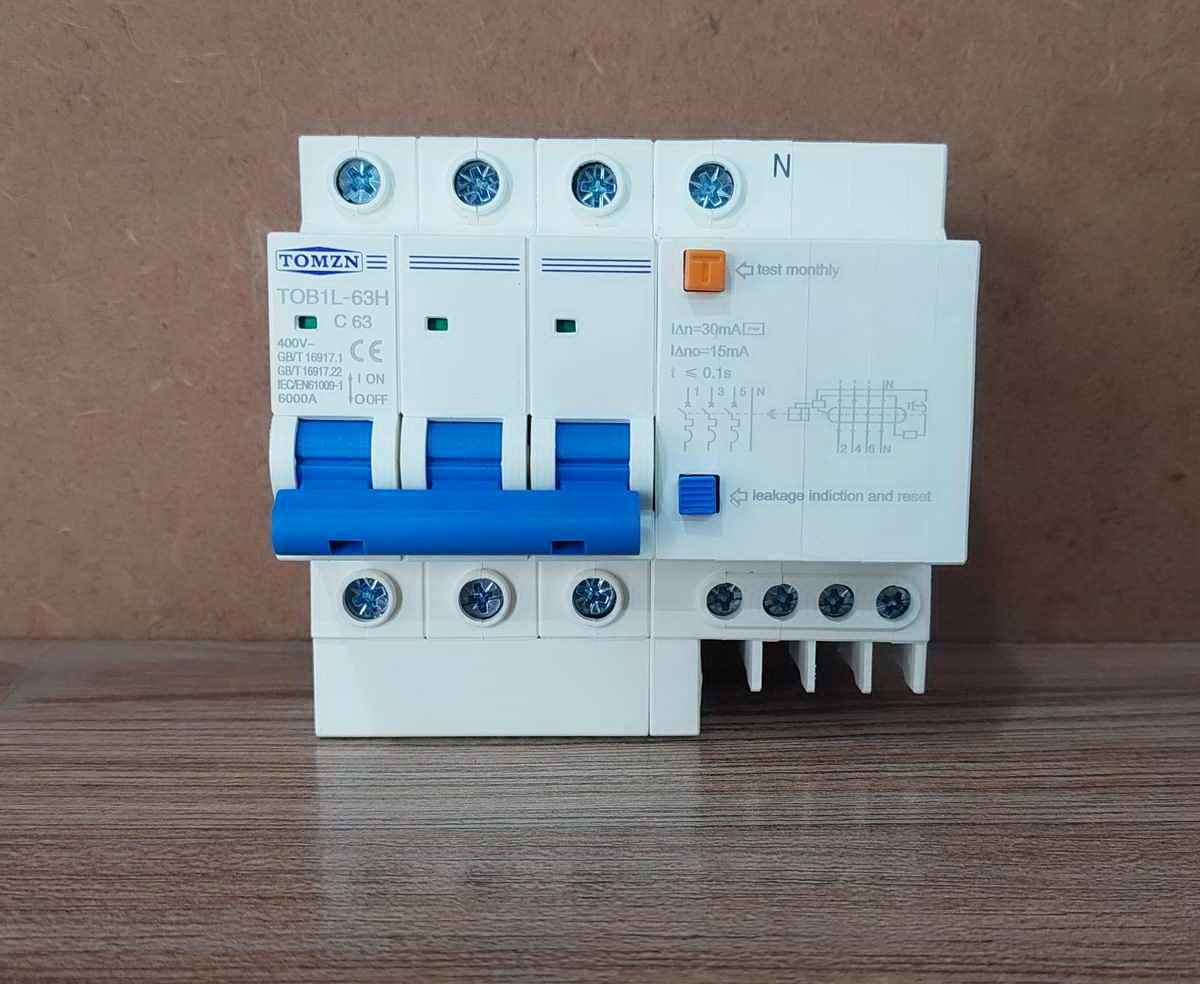
How an Earth Leakage Breaker Helps Protect People and Equipment from Electrical Faults
Electrical faults can create serious risks in residential, commercial, and industrial environments. When current escapes from its intended path, it may cause electric shock, damage connected equipment, or contribute to electrical fires. These hazards can develop because of damaged insulation, faulty appliances, moisture, or deteriorating wiring. Reliable electrical protection is therefore essential for maintaining a safe installation.
One important protective device used to address these risks is the earth leakage breaker. It monitors electrical current and responds when leakage reaches a specified operating level. A properly selected Earth Leakage Breaker can help disconnect a faulty circuit, reduce exposure to dangerous leakage current, and provide an additional layer of protection for people and electrical equipment.
What Is an Earth Leakage Breaker?
An earth leakage breaker is a protective device designed to detect current escaping from an electrical circuit through an unintended path. Under normal operating conditions, current supplied through the live conductor should return through the neutral conductor. When some current flows elsewhere, an imbalance may develop.
The device detects this abnormal condition and disconnects the electrical supply when its operating threshold is reached.
Earth leakage protection is commonly provided by residual current devices, including residual current circuit breakers (RCCBs) and residual current breakers with overcurrent protection (RCBOs). Some older installations may also contain voltage-operated earth leakage devices.
The exact operating principle depends on the device type, but modern residual-current protection generally monitors the difference between outgoing and returning current.
How Does an Earth Leakage Breaker Work?
Understanding the operating process helps explain why earth leakage protection is important.
1. Monitoring Electrical Current
In a typical residual-current device, the live and neutral conductors pass through a sensing component, usually a toroidal magnetic core.
During normal operation, the current flowing through the live conductor returns through the neutral conductor. Their magnetic effects cancel each other out, producing little or no residual magnetic flux.
The device therefore remains in its closed operating state.
2. Detecting Current Leakage
A leakage fault occurs when some current escapes from the intended electrical path.
For example, damaged insulation inside an appliance may allow current to flow through its metal enclosure and into the earthing system. This creates a difference between the current supplied through the live conductor and the current returning through neutral.
The sensing mechanism detects this imbalance.
3. Activating the Tripping Mechanism
When the residual current reaches the device’s specified operating threshold, the internal trip mechanism activates.
The contacts open and disconnect the protected circuit from the power supply. This helps reduce the duration of exposure to the leakage condition.
4. Restoring the Electrical Supply
After the device trips, the cause of the fault should be identified and corrected before resetting it.
Repeatedly switching the device back on without investigating the problem can leave people and equipment exposed to an unresolved electrical hazard.
Common Causes of Earth Leakage
Earth leakage can develop in many ways. Identifying common causes makes it easier to understand where protective devices are needed.
Damaged Cable Insulation
Electrical cables may deteriorate because of age, excessive heat, mechanical pressure, improper installation, or exposure to harsh environmental conditions.
When insulation becomes damaged, current may escape from the conductor and flow toward an unintended conductive surface or earth.
Faulty Electrical Appliances
Household and industrial appliances can develop internal insulation failures, damaged wiring, or defective components.
Washing machines, water heaters, refrigerators, pumps, and other equipment may create leakage conditions if their internal electrical parts become damaged.
Moisture and Water Ingress
Water and moisture can reduce insulation resistance and create unwanted current paths.
Bathrooms, kitchens, basements, outdoor electrical installations, and industrial areas with wet operating conditions require particular attention.
Poor Wiring Connections
Incorrect wiring, damaged terminals, and unsuitable neutral-to-earth connections can contribute to electrical faults or unwanted tripping.
Professional inspection is important to identify installation problems and confirm that protective devices are connected correctly.
Aging Electrical Equipment
Insulation materials and electrical components can deteriorate over time. Older equipment may gradually develop leakage problems even if it originally operated correctly.
Regular maintenance can help identify these conditions before they become more serious.
How an Earth Leakage Breaker Protects People
One of the main purposes of earth leakage protection is to reduce the risk associated with electric shock.
Reducing Electric Shock Exposure
A person may receive an electric shock when coming into contact with an energized conductor or a conductive part that has become live because of an insulation fault.
If the resulting current creates a sufficient imbalance, the earth leakage device can disconnect the circuit.
This helps limit the duration of the electrical hazard and can reduce the severity of certain shock incidents.
Providing Additional Protection in Wet Areas
Wet environments can increase the risk of electric shock because moisture may reduce the resistance between a person and an electrical source.
Earth leakage protection is particularly valuable in suitable circuits serving bathrooms, kitchens, outdoor outlets, and other locations where moisture may be present.
The device must still be combined with appropriate wiring, enclosures, earthing, and installation practices.
Supporting Electrical Safety in Public Areas
Commercial buildings, schools, hotels, hospitals, and other public facilities contain electrical equipment used by many people.
Suitable residual-current protection can help reduce certain electrical risks in these environments, particularly where portable equipment and socket outlets are installed.
Important Protection Limitations
An earth leakage breaker does not guarantee protection against every type of electric shock.
For example, if a person simultaneously contacts live and neutral conductors and the current remains balanced, a residual-current device may not detect the contact.
It also does not replace insulation, protective earthing, overcurrent protection, or safe working procedures.
How an Earth Leakage Breaker Protects Electrical Equipment
Earth leakage protection also contributes to the safety and reliability of electrical installations.
Reducing Damage from Insulation Faults
Damaged insulation can allow current to flow through unintended paths, potentially affecting connected equipment and conductive enclosures.
Disconnecting the circuit when a qualifying leakage fault occurs helps limit the duration of the abnormal condition.
Helping Reduce Leakage-Related Fire Risks
Certain electrical fires can be associated with insulation deterioration and leakage current.
An appropriately selected earth leakage device can detect some of these faults and disconnect the affected circuit. However, it does not replace suitable overcurrent protection, correct conductor sizing, or other fire prevention measures.
Supporting Equipment Reliability
Unexpected electrical faults can interrupt production, damage sensitive equipment, and create maintenance costs.
By disconnecting affected circuits when specified leakage conditions occur, earth leakage protection can help prevent some faults from developing into more extensive electrical problems.
Improving Fault Isolation
When protective devices are arranged correctly, a fault can be isolated to the affected circuit rather than unnecessarily interrupting a larger electrical installation.
This is particularly important in commercial and industrial facilities where multiple circuits supply different equipment and operational areas.
Types of Earth Leakage Protection Devices
Different devices provide different levels and forms of electrical protection. Understanding their functions is important when planning an installation.
Residual Current Circuit Breaker (RCCB)
An RCCB detects residual current by monitoring the difference between live and neutral currents.
It disconnects the circuit when the detected imbalance reaches its specified operating threshold.
An RCCB does not provide overload or short-circuit protection, so it must be coordinated with an appropriate overcurrent protective device.
Residual Current Breaker with Overcurrent Protection (RCBO)
An RCBO combines residual-current protection with overload and short-circuit protection.
It can therefore provide multiple protective functions for an individual circuit in one device.
This arrangement is often useful in distribution boards where circuit-level protection and fault isolation are important.
Earth Leakage Circuit Breaker (ELCB)
The term ELCB is also used for older voltage-operated earth leakage devices.
Unlike modern current-operated residual-current devices, a voltage-operated ELCB detects a voltage difference between an installation’s earthing connection and earth.
These devices operate according to a different principle and have limitations that make modern residual-current protection more widely used in many installations.
Earth Leakage Breaker vs. MCB
Although both devices are used in electrical protection systems, they respond to different fault conditions.
| Feature | Earth leakage protection device | MCB |
|---|---|---|
| Main function | Detects residual current or earth leakage | Protects against overloads and short circuits |
| Operating principle | Monitors current imbalance in residual-current devices | Responds to excessive current |
| Electric shock protection | Provides additional protection against certain leakage-related shock hazards | Not designed primarily for electric shock protection |
| Overload protection | Not provided by an RCCB | Provided |
| Short-circuit protection | Not provided by an RCCB | Provided |
| Typical use | Additional protection against earth leakage | Protection of electrical circuits against overcurrent |
An RCCB and an MCB are often installed together because their functions complement each other. An RCBO combines these protective functions in one device.
Common Applications of Earth Leakage Breakers
Earth leakage protection is used in different environments where electrical faults may create risks to people or equipment.
Residential Buildings
Homes contain lighting, socket outlets, kitchen appliances, water heaters, washing machines, and other electrical equipment.
Suitable residual-current protection can help reduce leakage-related hazards in residential installations.
Commercial Buildings
Offices, hotels, shopping centers, restaurants, and educational facilities use electrical systems that serve large numbers of people.
Earth leakage protection can be incorporated into distribution boards to protect selected circuits according to the installation design.
Industrial Facilities
Factories and workshops often contain machinery, motors, pumps, and electrical control equipment.
Appropriate earth leakage protection can help address insulation-related faults, although device selection must account for equipment characteristics and possible unwanted tripping.
Outdoor Electrical Systems
Outdoor lighting, garden equipment, irrigation pumps, and external socket outlets may be exposed to rain and moisture.
Suitable residual-current protection, weather-resistant enclosures, and proper earthing arrangements help improve installation safety.
Construction Sites
Temporary electrical systems on construction sites may operate in changing conditions where cables and portable equipment are exposed to physical damage and moisture.
Suitable earth leakage protection is an important part of a broader electrical safety arrangement.
Important Factors When Choosing an Earth Leakage Breaker
Selecting the correct device requires evaluating the electrical system, connected equipment, and required protection level.
1. Rated Residual Operating Current
The rated residual operating current, commonly identified as IΔn, indicates the residual current at which a device is designed to operate under specified conditions.
Devices with a 30 mA rating are commonly used for additional personal protection in applications where required by electrical standards.
Higher ratings may be appropriate for other protection purposes, depending on the installation design.
2. Rated Current
For RCCBs, the rated current indicates the current the device can carry under specified conditions. It must be coordinated with the associated overcurrent protective device and the circuit requirements.
3. Device Type
Different residual-current device types detect different current waveforms.
- Type AC: Detects sinusoidal alternating residual currents.
- Type A: Detects sinusoidal AC and pulsating DC residual currents.
- Type F: Supports Type A detection and certain composite residual currents associated with specific equipment.
- Type B: Detects AC, pulsating DC, and smooth DC residual currents within specified limits.
The correct type depends on the connected equipment and manufacturer recommendations.
4. Number of Poles
Two-pole devices are commonly used in suitable single-phase systems, while four-pole devices may be used in three-phase systems with neutral.
The pole configuration must match the supply arrangement and installation requirements.
5. Rated Voltage and Frequency
The device must be compatible with the electrical system’s voltage and frequency.
6. Installation Conditions
Temperature, humidity, enclosure protection, and the surrounding environment can influence device selection and performance.
The selected product should be suitable for the intended installation location.
Installation and Maintenance Best Practices
Correct installation and maintenance are essential for dependable earth leakage protection.
- Use qualified electricians: Installation and testing should be carried out by competent electrical professionals.
- Follow manufacturer instructions: Observe the correct terminal connections, mounting requirements, and operating conditions.
- Coordinate protective devices: Ensure that suitable overload and short-circuit protection is provided where necessary.
- Verify earthing arrangements: Confirm that protective earthing is correctly designed and installed.
- Use the test button: Operate the built-in test function according to the manufacturer’s recommended schedule.
- Investigate repeated tripping: Identify the source of leakage instead of repeatedly resetting the breaker.
- Inspect electrical equipment: Check cables, appliances, enclosures, and connections for signs of damage or moisture.
- Arrange periodic testing: Use suitable instruments and professional inspection to verify protective performance.
The test button checks the device’s basic tripping function under the test conditions. It does not replace comprehensive electrical inspection or instrument-based testing.
Common Reasons Why an Earth Leakage Breaker Trips
Unexpected tripping may indicate a problem with the electrical installation or connected equipment.
Common causes include:
- Damaged insulation in electrical cables.
- Leakage from faulty appliances.
- Moisture entering electrical enclosures.
- Incorrect neutral and earth connections.
- Accumulated leakage current from several connected devices.
- An unsuitable device type for the connected equipment.
- Deteriorating electrical components.
An electrician can investigate these issues by isolating circuits, inspecting connected loads, and performing appropriate electrical tests.
Repeated tripping should never be ignored because it may indicate an unresolved fault.
Conclusion
An earth leakage breaker is an important component of electrical safety because it detects certain unintended current paths and disconnects the supply when leakage reaches its specified operating threshold. This response can help reduce the risk of electric shock, limit some leakage-related fire hazards, and protect electrical equipment from the consequences of insulation faults.
Choosing the correct device involves considering its residual-current rating, current capacity, detection type, pole configuration, and compatibility with the electrical installation. Proper earthing, suitable overcurrent protection, professional installation, and regular testing remain essential.
When incorporated into a well-designed electrical protection system, earth leakage protection helps create safer and more reliable residential, commercial, and industrial environments.