
Hot Dip Galvanizing Line Applications in Automotive Manufacturing
Automotive manufacturing demands materials that are strong, durable, and resistant to corrosion. Vehicles are constantly exposed to moisture, road salts, and changing weather conditions, which can gradually weaken unprotected steel parts. To address this challenge, manufacturers rely heavily on protective coating technologies that extend the life of automotive components.
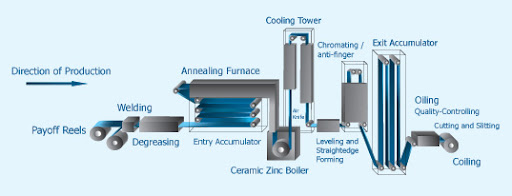
One of the most important technologies used in this field is a hot dip galvanizing line, which provides a strong zinc coating that enhances corrosion resistance and improves structural durability in vehicle production.
Importance of Corrosion Protection in Vehicles
Steel is the primary material used in many automotive structures due to its strength and cost efficiency. However, without protection, it can rust quickly when exposed to moisture and oxygen.
Corrosion in vehicles can lead to:
- Reduced structural strength
- Safety risks in critical components
- Higher maintenance costs
- Shorter vehicle lifespan
For this reason, protective coating processes are essential in automotive engineering.
Body Panels and Exterior Components
One of the most common uses of galvanized steel in the automotive industry is in body panels. Doors, hoods, roof panels, and side frames are often coated to prevent rust formation.
Galvanized steel helps ensure:
- Smooth surface finish for painting
- Long-term resistance to weather exposure
- Improved durability against scratches and minor impacts
This makes it suitable for both passenger and commercial vehicles.
Structural Parts and Chassis Applications
The vehicle chassis and structural frame require high strength and long-term stability. These components are often exposed to road water, mud, and salt, especially in colder regions.
Galvanized steel is used in:
- Frame supports
- Reinforcement beams
- Underbody structures
- Suspension mounting parts
The zinc coating provides an additional protective layer that helps maintain structural integrity over time.
Exhaust and Heat-Exposed Components
Some automotive parts are exposed to both heat and corrosive gases. While not all exhaust systems are fully galvanized, certain supporting brackets and heat shields use coated steel to improve resistance.
In these areas, galvanizing helps:
- Reduce corrosion from moisture and gases
- Extend service life of supporting structures
- Maintain mechanical stability under harsh conditions
Proper material selection is important for balancing heat resistance and corrosion protection.
Fasteners and Small Metal Parts
Small components such as bolts, nuts, brackets, and clips also benefit from galvanizing. Although small in size, these parts play a critical role in vehicle assembly and safety.
Galvanized coatings on fasteners help:
- Prevent rusting in hidden areas
- Improve assembly reliability
- Reduce long-term maintenance issues
- Maintain secure mechanical connections
Even minor corrosion in these parts can affect overall vehicle performance.
Automotive Supply Chain and Steel Processing
Steel used in automotive production is often processed through continuous coating systems before it reaches manufacturers. This ensures consistent quality and uniform protection across large production volumes.
A modern hot dip galvanizing line allows steel producers to supply automotive-grade materials with controlled coating thickness and surface quality, suitable for stamping and forming processes used in vehicle manufacturing.
Advantages in Vehicle Production
The use of galvanized steel in automotive manufacturing offers several benefits beyond corrosion resistance.
Key advantages include:
- Improved paint adhesion on coated surfaces
- Reduced need for additional protective treatments
- Longer service life of components
- Better performance in harsh environments
These benefits make galvanized steel a preferred choice in modern vehicle design.
Durability in Harsh Road Conditions
Vehicles often operate in environments where they are exposed to rain, snow, road salts, and humidity. These conditions accelerate corrosion in untreated steel.
Galvanized coatings help vehicles withstand:
- Coastal environments with high salt exposure
- Winter road conditions with de-icing chemicals
- High humidity regions
- Rough terrain with mud and water exposure
This improves overall reliability and reduces long-term repair needs.
Conclusion
Automotive manufacturing relies heavily on corrosion-resistant materials to ensure safety, durability, and performance. Galvanized steel plays a vital role in protecting both structural and non-structural vehicle components.
A well-operated hot dip galvanizing line supports the production of high-quality coated steel that meets the demanding requirements of the automotive industry. Through its wide range of applications, galvanizing continues to be an essential part of modern vehicle manufacturing and design.


