
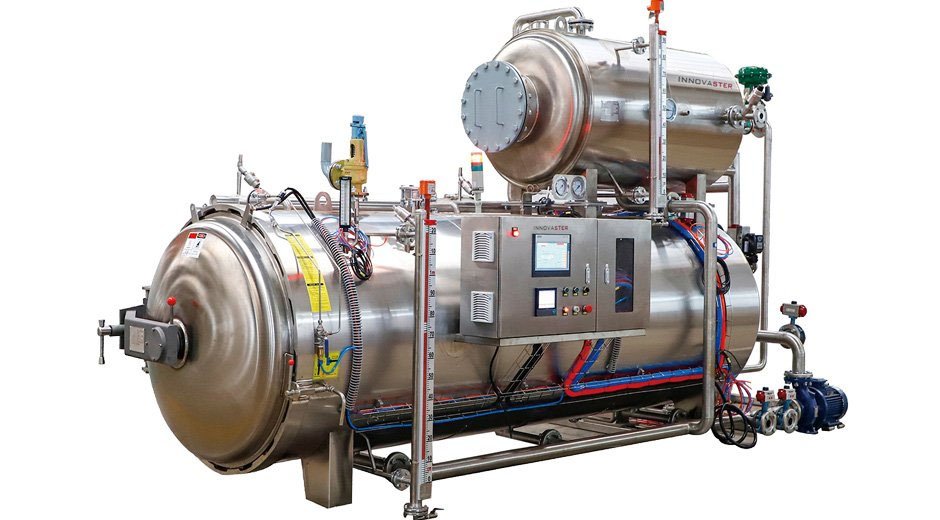
Food Sterilizer Retorts: Matching Equipment Specifications to Product and Packaging Requirements
Selecting suitable sterilization equipment is an important decision for food manufacturers aiming to maintain product safety, quality, and production efficiency. Different food products require different thermal processing conditions, and packaging materials can significantly influence how heat moves through a container. Choosing equipment without considering these differences may lead to inefficient processing, packaging damage, or inconsistent results.
A Food Sterilizer Retort is designed to process packaged food under controlled temperature and pressure conditions to achieve the required level of commercial sterilization. However, selecting the right system involves more than choosing a chamber size or heating method. Manufacturers must evaluate product characteristics, packaging formats, production capacity, heat transfer requirements, and process control features to ensure that the equipment matches their specific application.
Understanding Food Sterilizer Retorts
A food sterilizer retort is an industrial processing vessel used to heat sealed food containers according to an established thermal processing schedule. It provides controlled conditions for reducing microorganisms that could affect product safety or shelf stability.
Retort systems are commonly used for products such as:
- Canned vegetables and fruits
- Meat and poultry products
- Seafood and fish
- Soups, sauces, and gravies
- Ready-to-eat meals
- Retort pouch products
- Packaged dairy-based products suitable for retort processing
Different products have different heating characteristics. For example, a liquid sauce may heat differently from a dense meat product, even when both are processed in containers of similar dimensions. Equipment selection must account for these differences.
Why Product and Packaging Compatibility Matters
Product formulation and packaging design directly influence the thermal processing requirements of a food product.
The retort must transfer sufficient heat through the packaging and into the food while maintaining appropriate pressure conditions. If the equipment is not suitable for the packaging format or product characteristics, manufacturers may experience uneven heating, excessive processing times, or container deformation.
Before selecting a retort, manufacturers should understand:
- Product composition and viscosity
- Food particle size and distribution
- Container material and dimensions
- Fill weight and headspace
- Initial product temperature
- Required processing conditions
- Expected production volume
These details help determine the appropriate retort technology and equipment configuration.
Matching Retort Technology to Packaging Formats
Different packaging materials respond differently to heat and pressure. Selecting a compatible retort system helps protect package integrity during processing.
1. Metal Cans
Metal cans are widely used for shelf-stable vegetables, fruits, seafood, meat, and prepared foods.
They generally tolerate high processing temperatures and provide strong protection against external contamination when properly sealed.
Retort selection should consider:
- Can diameter and height
- Metal thickness and construction
- Closure and seam specifications
- Basket loading arrangement
- Required heating and cooling conditions
Steam, water spray, and other suitable retort technologies may be used depending on the product and process requirements.
2. Glass Containers
Glass jars are commonly used for sauces, preserved vegetables, fruit products, and specialty foods.
Because glass can be sensitive to sudden temperature changes, the heating and cooling stages must be carefully controlled.
Important considerations include:
- Glass thickness and container shape
- Closure design
- Headspace
- Temperature transition rates
- Pressure management
- Cooling water conditions
The retort should provide suitable control throughout the complete cycle to reduce the risk of thermal shock and container damage.
3. Retort Pouches
Retort pouches are flexible packages made from heat-resistant multilayer materials. They are often used for ready-to-eat meals, sauces, seafood, and prepared meat products.
Their relatively thin profile can support efficient heat transfer, but pouch processing requires appropriate handling and pressure control.
Equipment considerations include:
- Pouch dimensions and thickness
- Seal strength
- Basket or rack arrangement
- Spacing between packages
- Water circulation
- Counterpressure during heating and cooling
Pouches should be loaded in a configuration that allows consistent exposure to the processing medium.
4. Plastic Trays and Semi-Rigid Containers
Some ready meals and prepared foods are packed in heat-resistant plastic trays or semi-rigid containers.
These packages require retort systems compatible with their material properties and sealing arrangements.
Manufacturers should evaluate:
- Maximum allowable processing temperature
- Container rigidity
- Lid and seal performance
- Internal and external pressure differences
- Container deformation risks
- Cooling requirements
Not every plastic package is suitable for retort sterilization. Packaging suppliers should confirm the material’s compatibility with the intended processing conditions.
Selecting the Right Retort Technology
Several retort technologies are available for commercial food processing. Each has different operating characteristics and application requirements.
Steam Retorts
Steam retorts use saturated steam as the primary heating medium.
They are commonly used for suitable rigid packaging formats and applications where direct steam heating is appropriate.
Selection considerations include steam quality, air removal, temperature distribution, and process control.
Water Spray Retorts
Water spray systems distribute heated water through nozzles to transfer thermal energy to the packaged products.
They can be suitable for a range of packaging formats when the system is properly configured.
Important features include:
- Spray nozzle arrangement
- Water circulation capacity
- Pump performance
- Heating system design
- Pressure regulation
- Cooling control
Water Immersion Retorts
Water immersion systems use heated water to surround the product load.
They may be suitable for applications requiring extensive contact between the heating medium and containers.
Equipment selection should consider water volume, heating capacity, loading configuration, and pressure requirements.
Cascade Retorts
Cascade retorts distribute heated water over product loads through a controlled water delivery arrangement.
Their performance depends on water distribution, circulation design, chamber configuration, and the characteristics of the packaged products.
The appropriate technology should be selected according to the product, packaging, and validated process rather than assuming that one retort type is suitable for every application.
Important Equipment Specifications to Evaluate
Once the product and packaging requirements are understood, manufacturers can compare equipment specifications more effectively.
1. Chamber Capacity
Chamber capacity determines how much product can be processed in a single batch.
However, maximum internal volume does not always represent practical production capacity. Basket dimensions, container spacing, and circulation requirements also affect usable loading space.
Manufacturers should calculate capacity based on actual package dimensions and the required loading arrangement.
2. Operating Temperature and Pressure
The retort must support the temperature and pressure conditions required by the scheduled process.
The pressure vessel, valves, seals, and associated components should be designed for the specified operating conditions.
Equipment ratings should be verified against applicable engineering standards and regulatory requirements.
3. Heating Performance
Heating capacity influences how efficiently the system reaches the required processing temperature.
Manufacturers should consider the heating medium, available utilities, product load, chamber volume, and expected cycle time.
The heating system should provide repeatable performance under normal production conditions.
4. Water Circulation and Distribution
For water-based retort systems, circulation performance is essential.
Pump capacity, pipe layout, nozzle positioning, and water flow all influence heat distribution.
The equipment should be evaluated through appropriate temperature distribution testing under representative loading conditions.
5. Cooling Capability
Cooling performance affects both product handling and packaging integrity.
The retort should provide suitable cooling control while maintaining appropriate pressure conditions.
Cooling water availability, circulation, temperature, and discharge arrangements should be considered during equipment selection.
6. Control and Monitoring Systems
Modern retorts often include programmable control systems for managing processing stages.
Useful features may include:
- Programmable processing recipes
- Temperature monitoring
- Pressure monitoring
- Automatic valve operation
- Alarm notifications
- Batch identification
- Processing data recording
These functions support operational consistency and help manufacturers maintain reliable processing records.
Matching Equipment to Product Characteristics
Packaging is only one part of the selection process. The food itself also determines how heat moves through the container.
Liquid Products
Soups, beverages, and thin sauces may heat through natural or forced convection, depending on their formulation and processing conditions.
The equipment and process should account for product movement, container geometry, and viscosity.
Thick Sauces and Purees
High-viscosity products may heat more slowly because internal movement is limited.
Manufacturers should consider formulation, fill weight, container dimensions, and the location of the slowest-heating zone.
Solid and Particulate Foods
Products containing meat pieces, vegetables, or other solid ingredients may have complex heat penetration characteristics.
Particle size, distribution, density, and the surrounding liquid all influence thermal performance.
Ready-to-Eat Meals
Multi-component meals can contain ingredients with different thermal properties.
Their packaging arrangement, portion thickness, and formulation should be considered when establishing the processing schedule.
Production Capacity and Operational Efficiency
Equipment selection should support both current production requirements and realistic future growth.
Manufacturers should evaluate:
- Daily production targets: Determine the quantity of finished product required per shift.
- Batch loading capacity: Calculate the number of containers that can be processed safely in each cycle.
- Cycle duration: Include heating, holding, cooling, and loading or unloading time.
- Utility consumption: Assess steam, water, electricity, and compressed air requirements where applicable.
- Labor requirements: Consider loading arrangements, operator responsibilities, and material handling.
- Maintenance access: Ensure that pumps, valves, nozzles, sensors, and other components can be inspected and serviced.
A suitable retort should balance production capacity, operating costs, process requirements, and equipment reliability.
Food Safety and Thermal Process Validation
Selecting the correct machine does not automatically establish a safe processing schedule.
The manufacturer must validate the thermal process for the specific food product, packaging format, and production conditions.
Two important studies are commonly involved:
Temperature distribution testing: Evaluates how temperature varies throughout the retort chamber under defined operating and loading conditions.
Heat penetration testing: Determines how quickly heat reaches the slowest-heating location within the food container.
The results help qualified thermal processing specialists establish an appropriate scheduled process.
For low-acid shelf-stable foods, manufacturers must follow applicable regulations and use scientifically established processing requirements. Changes to product formulation, container dimensions, fill weight, initial temperature, or loading patterns may require process review or revalidation.
Common Equipment Selection Mistakes
Manufacturers can encounter avoidable problems when equipment decisions are based on incomplete information.
Choosing Capacity Without Considering Package Dimensions
A large chamber may not provide the expected production capacity if containers require additional spacing for proper heat distribution.
Ignoring Packaging Pressure Limitations
Flexible pouches, plastic trays, and glass containers may require specific pressure management and cooling arrangements.
Overlooking Product Heat Penetration
Products with different viscosities and compositions may require different processing conditions.
Focusing Only on Purchase Price
A low initial equipment cost may not reflect long-term utility consumption, maintenance needs, production limitations, or process control capabilities.
Neglecting Validation Requirements
Equipment should be evaluated alongside the testing and documentation needed to establish a reliable thermal process.
Conclusion
Choosing suitable food sterilization equipment requires a clear understanding of both product characteristics and packaging requirements. Container material, dimensions, fill weight, food composition, heat penetration, and pressure sensitivity all influence the appropriate retort configuration.
By evaluating chamber capacity, heating performance, circulation, pressure control, cooling capability, automation, and process validation requirements, manufacturers can make better-informed equipment decisions. A properly matched food sterilizer retort supports dependable thermal processing, packaging integrity, and consistent commercial food production.


