
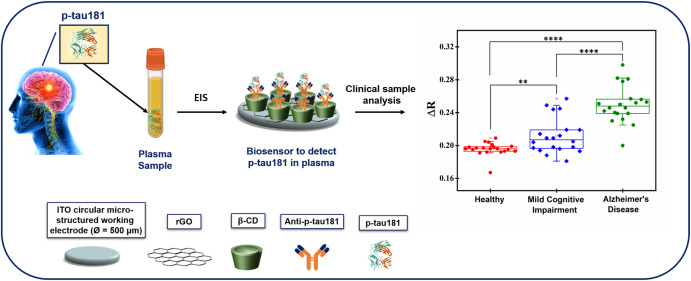
Assessing p-tau 181 Assay Precision Through Repeatability and Reproducibility Studies
Introduction
Phosphorylated tau at threonine 181, commonly known as p-tau 181, is an important biomarker investigated in Alzheimer’s disease and neurodegenerative disease research. Measuring this protein helps researchers explore tau-related biological changes, compare experimental groups, and investigate relationships between different biomarkers. For these studies to produce meaningful findings, analytical methods must deliver consistent results, not simply detect the target.
Evaluating p-tau 181 precision involves examining how closely repeated measurements agree under specified conditions. Repeatability and reproducibility studies help laboratories understand the sources of measurement variation and determine whether an assay is suitable for its intended research application. By assessing precision alongside sensitivity, specificity, and accuracy, researchers can make more informed decisions about assay selection and data interpretation.
Understanding p-tau 181 and Its Research Importance
Tau is a microtubule-associated protein that supports neuronal structure and intracellular transport. Its biological activity is regulated by post-translational modifications, including phosphorylation at different amino acid residues.
P-tau 181 refers specifically to tau phosphorylated at threonine 181. Researchers investigate changes in this biomarker as part of broader studies into Alzheimer’s disease biology and neurodegenerative processes.
P-tau 181 may be evaluated alongside other biomarkers, including:
- Total tau: Measures the overall tau recognized by a particular assay.
- P-tau 217: Detects tau phosphorylated at threonine 217.
- P-tau 231: Detects tau phosphorylated at threonine 231.
- Amyloid-beta 42 and 40: Used to investigate amyloid-related changes.
- Neurofilament light chain (NfL): Studied as a marker associated with neuronal injury.
These biomarkers provide complementary information. Their results should be interpreted according to the target measured, sample type, analytical method, and research objectives.
What Does Precision Mean in a p-tau 181 Assay?
Precision describes the agreement between repeated measurements of the same sample under specified conditions. A precise assay produces results that are close to one another when the same material is measured repeatedly.
Precision is different from accuracy. An assay can produce highly consistent results while systematically reporting values that differ from an accepted reference value.
For example, if repeated measurements of a sample produce similar concentrations, the method may demonstrate good precision. However, additional accuracy studies are needed to determine whether those concentrations represent the expected value.
Precision assessment is important because even small variations can influence the interpretation of biomarker differences, especially when research involves low analyte concentrations or repeated measurements over time.
Repeatability: Measuring Consistency Under the Same Conditions
Repeatability is the degree of agreement between measurements obtained under nearly identical conditions over a short period.
In a p-tau 181 assay, repeatability studies commonly involve analyzing the same sample multiple times using the same instrument, operator, reagents, and procedure.
Factors Evaluated in Repeatability Studies
- Pipetting consistency: Differences in sample or reagent volumes can affect assay response.
- Reaction timing: Inconsistent incubation periods may influence antibody binding and signal development.
- Instrument stability: Changes in detector performance can introduce measurement variation.
- Reagent handling: Preparation and storage conditions may affect assay reactions.
- Sample homogeneity: Inadequate mixing can cause differences between replicate aliquots.
Why Repeatability Matters
Good repeatability helps researchers determine whether observed differences between samples are likely to reflect biological variation rather than inconsistent measurement.
It is particularly useful during initial assay evaluation, routine laboratory testing, and method optimization.
Reproducibility: Assessing Consistency Across Conditions
Reproducibility evaluates how closely results agree when measurement conditions vary. Depending on the study design, this may involve different laboratories, instruments, operators, reagent lots, or testing periods.
Reproducibility studies provide broader evidence of method consistency than repeatability studies alone.
Common Sources of Reproducibility Variation
Operator differences: Different levels of experience or variations in sample handling may influence results.
Instrument differences: Separate analyzers may produce different responses because of calibration, maintenance, or detector characteristics.
Reagent lot variation: Differences between manufacturing lots may affect antibody activity or signal generation.
Laboratory conditions: Temperature, humidity, workflow design, and other environmental factors may contribute to variability.
Procedural differences: Changes in sample preparation, incubation, or calibration procedures can affect measurements.
Evaluating these factors helps determine whether an assay can produce comparable results across the conditions relevant to a research project.
Common Measures of Assay Precision
Several statistical measures are used to evaluate the variation observed in p-tau 181 measurements.
Standard Deviation
Standard deviation (SD) describes the spread of measurements around their mean. A smaller SD generally indicates that repeated results are more closely grouped.
SD is expressed in the same units as the measured concentration, which can make it useful when evaluating variability at a particular concentration level.
Coefficient of Variation
The coefficient of variation (CV) expresses standard deviation relative to the mean, usually as a percentage.
It allows researchers to compare relative variability across samples with different average concentrations.
A lower CV generally indicates better relative precision. However, acceptable CV limits depend on the assay, concentration range, and intended application.
Within-Run Precision
Within-run precision describes variation among replicate measurements performed in the same analytical run.
It can help identify inconsistencies related to pipetting, reaction conditions, or instrument measurement.
Between-Run Precision
Between-run precision evaluates variation across separate analytical runs. It may reflect differences in calibration, reagent preparation, instrument conditions, or testing days.
Total Precision
Total precision considers multiple sources of variation within the defined study design. It can include within-run, between-run, between-day, and other relevant components.
The study should clearly specify which sources of variation are included rather than using the term without defining its scope.
Designing a Repeatability Study for p-tau 181
A well-planned repeatability study helps establish how consistently an assay measures p-tau 181 under controlled conditions.
1. Select Appropriate Samples
Researchers should select samples that represent relevant concentration levels. Evaluating only one concentration may provide an incomplete picture of assay performance.
Where possible, include low, intermediate, and high concentrations within the intended measuring range.
2. Prepare Replicates
Each sample should be measured multiple times according to a predefined protocol. Replicate measurements should be handled consistently to minimize avoidable variation.
3. Maintain Controlled Conditions
The same instrument, operator, reagent lot, and analytical procedure should be used when evaluating repeatability.
Sample preparation, incubation conditions, and instrument settings should remain consistent.
4. Calculate Precision Statistics
The mean, standard deviation, and coefficient of variation can be calculated for each concentration level.
Results should be compared with predefined acceptance criteria appropriate to the assay’s intended use.
5. Investigate Unusual Variation
If replicate measurements show unexpected differences, laboratories should review sample homogeneity, pipetting, reagent preparation, instrument status, and reaction conditions.
Designing a Reproducibility Study
Reproducibility studies assess whether an assay remains consistent when relevant testing conditions change.
Evaluate Multiple Runs and Days
Measurements performed on different days can help reveal variation associated with calibration, reagent preparation, and laboratory conditions.
Include Different Operators
When multiple technicians are expected to use the assay, operator variation should be evaluated through a predefined study design.
Assess Reagent Lot Differences
Testing more than one reagent lot can help identify whether changes in assay components influence quantitative results.
Compare Instruments or Laboratories
For methods intended for use across multiple sites or instruments, inter-instrument and inter-laboratory studies can provide valuable evidence of comparability.
Analyze Sources of Variation
Statistical methods such as analysis of variance may help separate within-run and between-run components when the study design supports this approach.
The results can guide decisions about standardization, training, quality control, and method suitability.
Factors That Influence p-tau 181 Assay Precision
Precision depends on the entire analytical process, from sample collection to final signal measurement.
Antibody Quality and Specificity
Antibodies determine how effectively the assay recognizes p-tau 181. Variations in antibody affinity, specificity, or lot quality may influence signal consistency.
For phosphorylated tau assays, recognition of the intended phosphorylation site is particularly important. Cross-reactivity with related tau forms may affect the interpretation of results.
Sample Preparation
Inconsistent collection, processing, storage, or mixing can introduce variation before the analytical reaction begins.
Researchers should standardize sample preparation and use validated procedures for the intended matrix.
Calibration
Calibration establishes the relationship between assay signal and analyte concentration. Differences in calibrator preparation, curve fitting, or calibration stability may influence reported concentrations.
Regular calibration verification and appropriate quality-control procedures help identify problems.
Reagent Stability
Antibodies, detection reagents, and other assay components may be affected by temperature, storage duration, or repeated handling.
Following established storage and preparation procedures helps maintain consistent assay performance.
Instrument Performance
Instrument condition can influence signal measurement. Routine maintenance, performance checks, and consistent operating conditions help reduce technical variation.
Precision Across Different Detection Technologies
Different technologies can be used to measure p-tau 181, and each has its own potential sources of variability.
Enzyme-Linked Immunosorbent Assay (ELISA)
ELISA uses antibody recognition and an enzyme-mediated reaction to produce a measurable color signal.
Precision may be affected by pipetting, washing, incubation timing, substrate development, and microplate reader performance.
Standardized handling and appropriate replicate testing are important for reducing variation.
Chemiluminescence Immunoassay (CLIA)
CLIA combines antibody-based target recognition with a chemical reaction that generates light. A compatible analyzer measures the signal and relates it to concentration through calibration.
Automation may help standardize certain workflow steps, but precision still depends on reagent performance, calibration, sample handling, and instrument condition.
The specific p-tau 181 reagent system must be validated for the analyzer on which it is used. General analyzer capabilities alone do not establish assay-specific precision.
Electrochemiluminescence Immunoassay
Electrochemiluminescence uses an electrochemical process to trigger light emission. Depending on the platform, it can support sensitive measurement and multiplex analysis.
Precision assessment should account for platform-specific reagents, instrument settings, calibration procedures, and sample matrices.
Interpreting Precision at Different Concentration Levels
Assay precision may vary across the measuring range.
At low concentrations, background signal and small absolute measurement differences can have a substantial effect on the coefficient of variation.
At higher concentrations, changes in binding behavior or signal saturation may influence measurement consistency.
For this reason, laboratories should evaluate precision at multiple levels rather than relying on a single sample concentration.
| Concentration level | Potential challenge | Evaluation focus |
|---|---|---|
| Low | Background signal and relative variability | CV and quantitative performance near the LoQ |
| Intermediate | Routine measurement variation | Repeatability and between-run precision |
| High | Signal saturation or nonlinearity | Precision within the upper measuring range |
The selected concentration levels should reflect the intended research application and validated measuring range.
The Relationship Between Precision, Accuracy, and Sensitivity
These performance characteristics are related but describe different aspects of assay quality.
| Characteristic | Meaning | Key question |
|---|---|---|
| Precision | Agreement between repeated results | Are measurements consistent? |
| Accuracy | Agreement with an accepted reference | Are measurements close to the expected value? |
| Sensitivity | Ability to detect low concentrations | Can low levels be detected? |
| Specificity | Ability to recognize the intended target | Is the correct analyte being measured? |
| Linearity | Relationship between concentration and response over an interval | Does the assay follow its validated response model? |
An assay should not be selected based on one characteristic alone. A method with good sensitivity but poor precision may produce unreliable quantitative results. Similarly, precise measurements can still be inaccurate if calibration is biased.
Common Causes of Poor Precision and How to Address Them
| Potential cause | Possible effect | Recommended approach |
|---|---|---|
| Inconsistent pipetting | Variable sample and reagent volumes | Use calibrated pipettes and standardized technique |
| Poor sample mixing | Differences between aliquots | Follow validated mixing procedures |
| Reagent deterioration | Inconsistent signal generation | Follow storage and stability requirements |
| Calibration variation | Differences between analytical runs | Verify calibration and monitor controls |
| Instrument instability | Variable signal measurement | Perform routine maintenance |
| Operator variation | Differences in sample handling | Provide training and use standard procedures |
| Matrix interference | Inconsistent analyte recovery | Conduct matrix-specific validation |
| Uncontrolled reaction timing | Variation in binding and signal development | Standardize incubation conditions |
Identifying the source of variation is an important step toward improving assay performance.
Quality Control for Maintaining Precision
Quality-control procedures help laboratories monitor whether an assay continues to perform consistently.
Control Materials
Appropriate control samples should be measured according to the laboratory’s established testing schedule. Where suitable, controls should cover different concentration levels.
Control Charts
Control charts can help laboratories identify shifts, trends, and unexpected variation over time. They provide a visual record of assay performance and support investigation when results fall outside predefined limits.
Reagent Lot Monitoring
New reagent lots should be evaluated according to established procedures to identify changes that may influence precision.
Instrument Maintenance
Routine maintenance and performance verification help reduce variation associated with instrument condition.
Documentation
Laboratories should record quality-control results, calibration information, reagent lots, instrument maintenance, and corrective actions. Good documentation supports traceability and reproducibility.
Applications of Precision Assessment in Neurodegenerative Disease Research
Reliable p-tau 181 measurement supports several research activities.
Biomarker Comparison Studies
Researchers may compare p-tau 181 concentrations across experimental groups. Good precision helps ensure that observed differences are not primarily caused by inconsistent measurement.
Longitudinal Research
Repeated measurements over time require consistent assay performance. Precision assessment helps researchers understand the extent to which analytical variation may influence apparent biomarker changes.
Method Development and Validation
Repeatability and reproducibility studies help developers evaluate antibody combinations, detection technologies, and assay formats.
Multi-Site Research
Studies conducted across multiple laboratories benefit from reproducibility assessments that identify differences in instruments, operators, reagents, and procedures.
Multi-Biomarker Investigations
P-tau 181 may be measured alongside amyloid-related biomarkers and other indicators of neurodegeneration. Reliable precision helps support comparisons within broader biomarker studies.
These applications are research-focused. P-tau 181 results should not be interpreted as standalone clinical diagnoses.
Best Practices for Improving Assay Precision
Laboratories can strengthen p-tau 181 measurement consistency by adopting a structured quality approach.
- Use validated assay reagents and compatible instrumentation.
- Standardize sample collection, processing, and storage.
- Train operators in consistent pipetting and handling procedures.
- Follow validated incubation and reaction conditions.
- Evaluate precision at multiple concentration levels.
- Verify calibration and monitor quality-control results.
- Assess reagent lot-to-lot consistency.
- Maintain instruments according to established procedures.
- Investigate unexpected replicate variation.
- Document analytical conditions and corrective actions.
These practices help reduce avoidable variation and improve confidence in research data.
Future Directions in p-tau 181 Precision Assessment
Advances in biomarker technology may improve measurement consistency and support more comprehensive analytical validation.
Greater Automation
Automated sample processing and detection systems may reduce some sources of manual variation. Their benefits should be demonstrated through method-specific precision studies.
Improved Reagent Characterization
More consistent antibody production and reagent quality assessment may help reduce lot-related differences.
Advanced Detection Technologies
Developments in chemiluminescence, electrochemiluminescence, and high-sensitivity immunoassays may expand the options available for low-concentration biomarker measurement.
Better Inter-Laboratory Standardization
Consistent procedures, reference materials, and reporting practices may improve comparability across research sites.
Integrated Quality Monitoring
Combining precision data with calibration, quality-control trends, and instrument performance records may help laboratories identify emerging problems earlier.
Conclusion
Assessing p-tau 181 assay precision through repeatability and reproducibility studies is essential for understanding the consistency of quantitative biomarker measurements. Repeatability evaluates agreement under controlled conditions, while reproducibility examines performance when relevant testing conditions vary.
A comprehensive evaluation should consider sample handling, antibody quality, calibration, reagent stability, instrument performance, and measurement concentration. Statistical measures such as standard deviation and coefficient of variation help describe the variation observed across replicates and analytical runs.
By using structured precision studies and consistent quality-control procedures, laboratories can select suitable methods, identify sources of analytical variation, and produce more dependable data for Alzheimer’s disease and broader neurodegenerative disease research.


